Exploring World Cultures with Coloring Pages
The world is full of fascinating cultures, unique traditions, and different ways of living. For children, discovering these differences can be an exciting experience that encourages curiosity and respect for others.
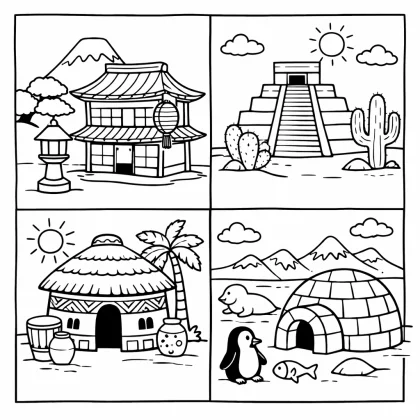
A simple and fun way to introduce children to this diversity is through world cultures coloring pages. With drawings, children ages 6 to 8 can explore traditional clothing, monuments, celebrations, and representative elements from different parts of the world.
In addition to being a creative activity, coloring cultural scenes provides an opportunity to talk about how people live in other countries and what things we share in common.
Why teach about cultures from an early age
Childhood is an ideal time to nurture curiosity about the world.
When children learn about other cultures, they begin to understand that there are many different ways of living, eating, celebrating, and dressing.
This learning helps develop important values such as:
- Respect
- Empathy
- Curiosity
- Cultural openness
Understanding that the world is diverse allows children to grow with a broader and more respectful perspective.
How drawings help children learn about cultures
Images are a powerful learning tool for children.
When children observe and color cultural scenes, they can identify important visual elements such as:
- Traditional clothing
- Famous landmarks
- Musical instruments
- Homes and buildings
- Celebrations
While coloring, adults can explain what each element represents.
This turns the activity into a small cultural exploration.
World cultures children can discover
Japanese culture
Japan has a rich culture full of fascinating traditions.
Children can discover elements such as:
- Kimonos
- Traditional temples
- Japanese gardens
They can also learn that Japan is a country made up of many islands.
Mexican culture
Mexico is known for its vibrant colors, music, and celebrations.
Children can discover elements such as:
- Traditional hats
- Maracas
- Festive decorations
These images help children understand the importance of music and celebration in Mexican culture.
African cultures
Africa is a continent with enormous cultural diversity.
Some drawings may include:
- Percussion instruments
- Clothing with colorful patterns
- Traditional homes
These representations allow children to talk about the rich cultural heritage of the continent.
European culture
Europe also offers many interesting elements to explore.
Children can color scenes that include:
- Castles
- Traditional markets
- Folk costumes
Each region has unique traditions that can be discovered through images.
Indigenous cultures
Indigenous cultures around the world often have a deep connection with nature.
Children can learn about elements such as:
- Handcrafted art
- Traditional clothing
- Musical instruments
These cultures also highlight the importance of respecting the natural environment.
Step-by-step educational activity
World cultures coloring pages can be used in a simple guided activity.
Step 1: Observe the drawing
Before coloring, invite the child to carefully observe the scene.
You can ask questions such as:
- What elements do you see?
- What clothes are the people wearing?
Step 2: Color with imagination
Children can use bright colors to represent cultural elements.
They can also invent creative color combinations.
Step 3: Talk about the place
While the child colors, you can talk about the country or culture represented.
This turns the creative moment into an educational experience.
Games to explore cultures
Activities can be expanded with simple games.
Map game
Children can locate on a map the place where the culture from the drawing comes from.
Food game
Adults can mention typical foods from different countries.
This helps children understand that culture is also reflected in food.
Stories from around the world
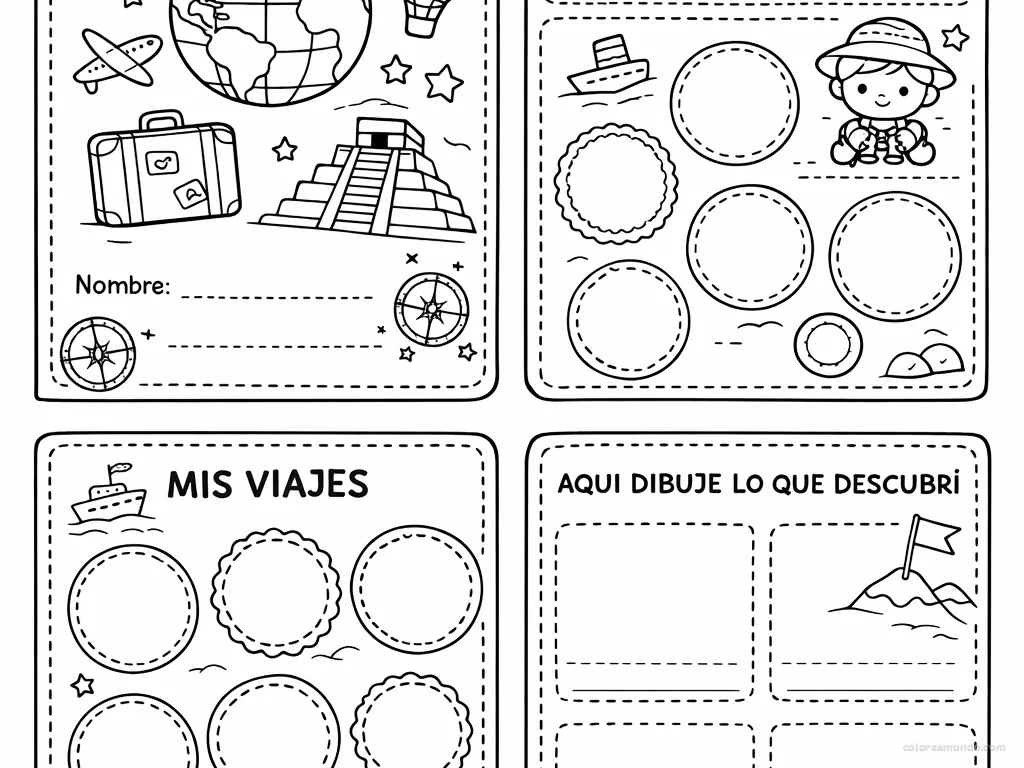
Children can invent a story about a character traveling to different countries.
How to explore this topic in the classroom
Teachers can use cultural activities as part of educational projects.
Cultural week
Each day can focus on discovering a different culture.
World mural
Colored drawings can be placed on a mural with the name of the country.
Simple presentations
Children can explain what they learned about each culture.
Educational benefits of this activity
World cultures coloring pages offer several benefits for children's development.
Curiosity about the world
Children discover that the planet is full of interesting places.
Respect for diversity
They learn that each culture has valuable traditions.
Creative development
Coloring cultural scenes stimulates imagination.
Visual learning
Images make cultural concepts easier to understand.
Discover the world through creativity
Exploring cultures through art allows children to learn in a fun and meaningful way.
World cultures coloring pages combine creativity, knowledge, and curiosity.
Each scene becomes a small window into different parts of the planet, helping children understand that we live in a diverse world full of stories waiting to be discovered.