How to Develop Critical Thinking in Children Ages 6 to 8 Without Screens: Practical Strategies for Home
Many parents share the same concern: “My child doesn’t ask many questions,” or “They accept everything they hear without thinking about it.” In the classroom, something similar happens. Some children respond, but they don’t necessarily reflect. Others repeat what they hear without analyzing it.
Between ages 6 and 8, something important happens: thinking begins to move beyond pure intuition and becomes more organized and logical. This is a key moment to nurture critical thinking—not through complex debates, but through everyday experiences.
And the best part: screens are not required.
In This Guide, You Will Learn
- What critical thinking really means in childhood and how it shows up between ages 6 and 8.
- How to encourage reasoning and decision-making in daily situations.
- Practical strategies you can apply at home or in the classroom without devices.
- Common mistakes that slow the development of independent judgment.
- Concrete activities to start this week.
Why Critical Thinking Is Key in Child Development
Critical thinking does not mean a child argues about everything. Nor does it mean having “strong opinions.” It means learning to:
- Ask questions.
- Look for reasons.
- Compare options.
- Anticipate consequences.
Between ages 6 and 8, executive functions such as working memory, cognitive flexibility, and inhibitory control continue to strengthen. These skills allow children to analyze rather than simply react.
From the ColoreaMundo perspective, deep cognitive development grows through real-life experiences: meaningful conversations, simple strategy games, guided decisions, and exploration of the environment.
This is not just an academic topic. It is the foundation of future autonomy.
1. Conversations That Spark Reasoning
Many adults ask closed-ended questions:
- “Did you like it?”
- “Yes or no?”
Critical thinking is activated through open-ended, reflective questions.
Example at Home
Instead of saying:
“Pick up your toys now.”
Try asking:
“What happens if we leave everything on the floor?”
The child begins to anticipate consequences.
In the Classroom
After reading a story, instead of:
“Who was the main character?”
Try:
“Why do you think they made that decision? What other choice did they have?”
This type of dialogue strengthens analysis and perspective-taking.
It is not about interrogating. It is about opening space to think.
2. Everyday Games That Encourage Decision-Making
Critical thinking is trained through action.
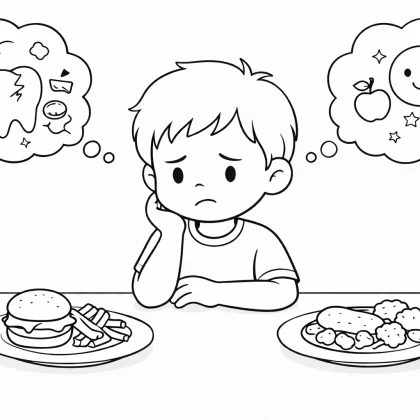
Game: “Two Options, One Decision”
Present real-life situations:
“We have time for one activity before dinner. Should we draw or build a puzzle? Why?”
The child must explain their choice.
Activities as a Mental Lab
- Cooking by following steps.
- Building structures with blocks.
- Solving simple riddles.
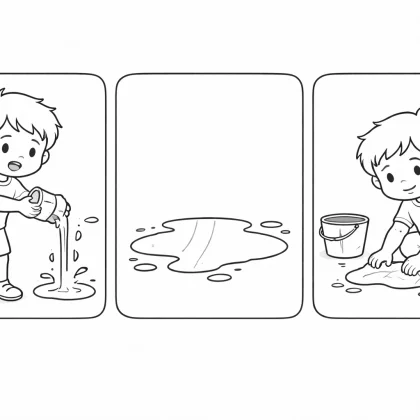
When something does not work, avoid correcting immediately. Ask:
“What do you think happened?”
Mistakes become tools for reasoning.
3. Analyzing Real-Life Situations
Between ages 6 and 8, children begin to notice social rules, fairness, and consequences.
We can use this awareness.
Practical Example
At the playground:
“If everyone wanted to use the swing at the same time, how could we solve that?”
At home:
“If we spend all our money on candy, what won’t we be able to do later?”
These conversations develop cause-and-effect thinking and early moral judgment.
We do not need big debates—just everyday moments connected to reflection.
4. Encouraging Independence with Guided Responsibility
Critical thinking grows when children are given small, real decisions.
- Organizing their backpack.
- Choosing the order of their homework.
- Proposing a solution to a minor conflict.
As adults, we must resist the urge to solve everything quickly.
From a professional standpoint, over-intervening weakens analytical ability.
Guidance does not mean removing limits. It means reflective support.
Age-Based Recommendations
Ages 3–5
Thinking is more concrete. Work with simple questions:
- “What happened first?”
- “What comes next?”
ColoreaMundo’s Ages 3–5 pathway includes sensory and narrative activities that build the foundation for reasoning.
Ages 6–8
This is when comparisons, arguments, and anticipation of consequences are introduced.
Explore our Ages 6–8 pathway and parent guides focused on independence and organization.
Ages 9–12
Thinking becomes more abstract. Guided debates, age-appropriate news analysis, and collaborative projects can be introduced.
Concrete Actions for This Week
- Ask one open-ended question daily instead of giving a direct order.
- Let your child choose between two options and explain their reasoning.
- Analyze one everyday situation together (purchase, game, conflict).
- Introduce a small logic challenge without screens.
- At the end of the day, ask: “What did you learn today that you didn’t know before?”
Small changes build powerful skills.
Mini FAQ
What if my child says “I don’t know”?
That is normal. Give them time. Rephrase the question. Critical thinking is not imposed—it is cultivated.
How much time should we dedicate daily?
It is not an extra subject. It is integrated into daily life. Ten intentional minutes can make a difference.
Does critical thinking make children disobedient?
No. When paired with clear boundaries, it strengthens responsibility—not rebellion.
Can this be done without special materials?
Absolutely. Conversations, simple games, and real-life situations are enough.
Developing critical thinking in children ages 6 to 8 does not depend on apps or digital platforms. It depends on adults who ask thoughtful questions, listen carefully, and allow space for reflection.
We invite you to explore our age-based pathways and related educational resources to deepen screen-free activities.
This week, choose one of the suggested actions and put it into practice. Notice what changes. Often, the difference begins with one well-crafted question.